London Hyperbaric Medicine Private Care

Please Note: our Private Care service for elective conditions will be resumed on 1st February 2026. Unfortunately we are unable to offer HBOT treatments before that date.

PRIVATE CARE

The Hyperbaric Unit at Whipps Cross University Hospital is a specialist centre for hyperbaric and diving medicine, with over twenty-five years’ experience in the assessment and treatment of patients using Hyperbaric Oxygen Therapy (HBOT).

Alongside its commissioned emergency hyperbaric capability for acute decompression illness and gas embolism, LHM Healthcare provides a range of private and elective hyperbaric medical services delivered through separate clinical and funding pathways.
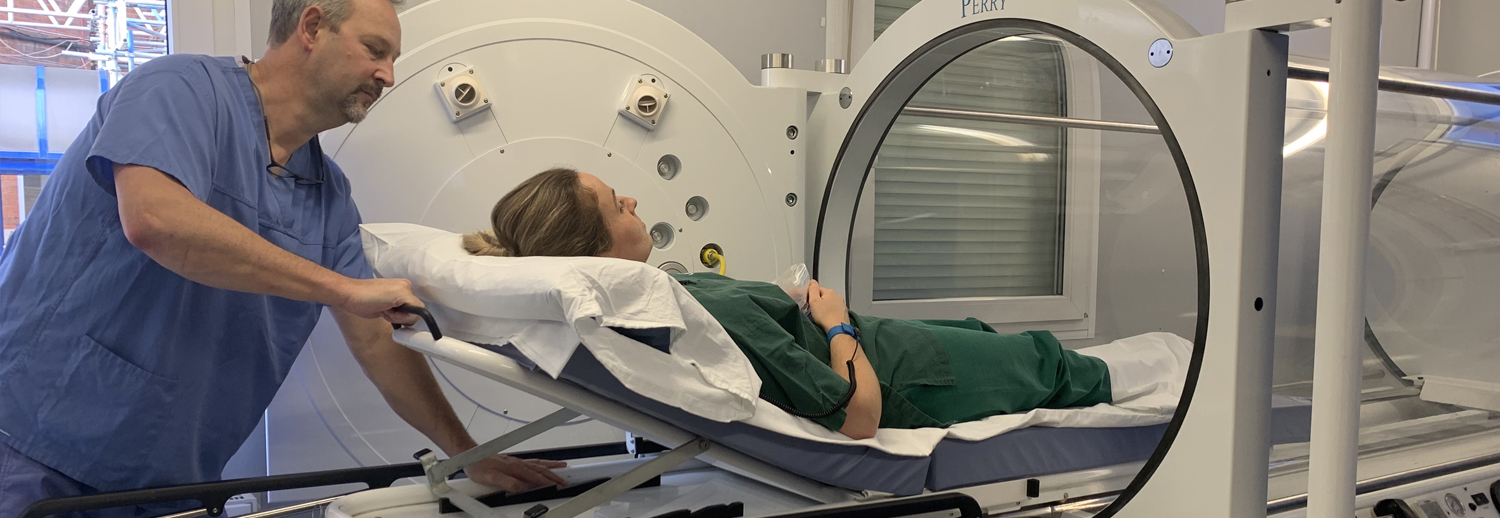
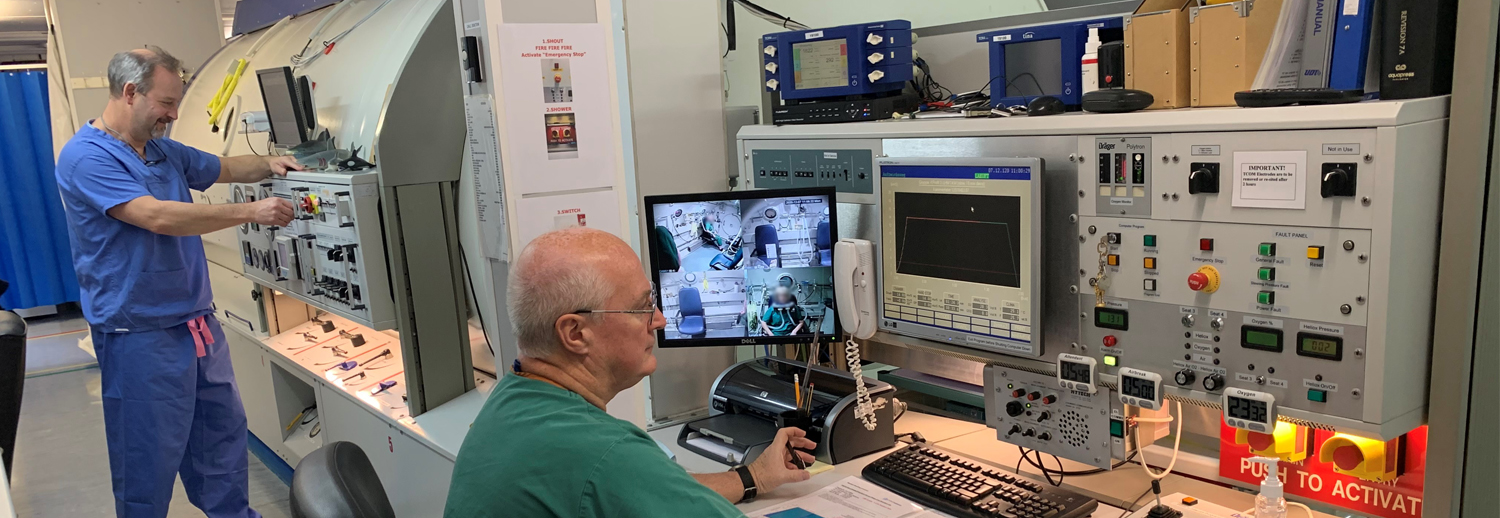
Our London facility houses a large multiplace chamber and a smaller monoplace chamber and is staffed by a highly experienced multidisciplinary team, including physicians specialising in hyperbaric medicine.

We are recognised nationally and internationally for delivering safe, high-quality hyperbaric care in accordance with NHS England guidance and the British Hyperbaric Association Code of Practice.

All patients accessing private or elective HBOT are assessed by one of our hyperbaric medicine physicians to determine whether treatment is clinically appropriate.

We offer assessment and treatment for a broad range of internationally recognised indications for hyperbaric oxygen therapy, working closely with referring clinicians to ensure coordinated and clinically appropriate care.

Many patients are referred with conditions associated with impaired tissue healing, including complications related to diabetes or following radiotherapy for cancer treatment.

Hyperbaric oxygen therapy involves breathing oxygen at increased atmospheric pressure within a specialised chamber. This allows significantly higher levels of oxygen to be delivered to body tissues, supporting healing and recovery in selected conditions where conventional treatments alone may be insufficient.

Private and elective hyperbaric services are self-funded or insurer-funded and are delivered independently of NHS England commissioning arrangements. NHS-commissioned emergency services, where applicable, always take priority.

Individualised HBOT care plans are designed to complement standard medical or surgical care and to optimise clinical outcomes. For selected patients, HBOT may offer benefits not achieved with standard therapies alone.

For further information about private and elective hyperbaric assessment or treatment, please contact our Patient Administration Manager on 020 8539 1222.

Conditions we treat include:

Radiation damage to soft tissues and bone Radionecrosis and osteoradionecrosis.

As well as destroying cancer cells, radiotherapy can cause injury to surrounding tissues leading to tissue damage and chronic debilitating symptoms. HBOT can be effective in

Diabetic foot ulcers and ischaemic ulcers.

Diabetes can lead to damage to small vessels which causes tissue to become hypoxic. Even seemingly innocuous injuries can lead to wounds that ulcerate and cannot heal due to the low levels of Oxygen in the tissues. HBOT can reverse these changes and aid healing as part of a multidisciplinary approach to wound care.

Surgical and hypoxic wounds that don’t respond to standard treatment within 6 weeks.

HBOT can be used as an adjunctive treatment to promote wound healing in chronic hypoxic wounds of other causes such as surgery.

Idiopathic sudden sensorineural Hearing loss (ISSHL)

Idiopathic sudden sensorineural hearing loss is classically defined as a hearing loss of at least 30 dB occurring within three days over at least three contiguous frequencies. The most common clinical presentation involves an individual experiencing a sudden unilateral hearing loss, tinnitus, a sensation of aural fullness and vertigo. Although clear clinical evidence is lacking, a Cochrane review in 2010 suggested HBOT may be useful in the treatment of this condition and so patients with moderate to profound ISSHL (≥ 41 dB) who present within 14 days of symptom onset should be considered for HBO2.

Selected sports-related injuries

HBOT can also help with recovery from certain sporting injuries when used in conjunction with a specialist physiotherapy treatment plan.

HBOT following cosmetic surgical procedures

HBOT has been found to benefit patients following some of the most widely used cosmetic surgical procedures. Plastic surgery patients face the usual post-operative recovery challenges that may follow surgery, but they are also vulnerable to some specific surgery-related after-effects and complications.

HBOT can also help speed up recovery, allowing you to get back to normal life sooner in the post op period.

We treat:

Non-healing problem wounds including complications arising from skin grafts and flaps following Facelifts, Abdominoplasty (tummy-tuck procedures), Rhinoplasty (nose refinement), Breast surgery and other procedures.

Patients who receive HBOT recover much faster in the post op period. HBOT can also help aid in reducing visible scarring and skin breakdown by stimulating angiogenesis, (the formation of new blood vessels) and the production of collagen, which is essential for body tissue repairs.

For many of our patients five to ten treatments after surgery may be sufficient.

Contact Us For Further Information

For patients:

If you would like to discuss the potential benefits of HBOT, please call the unit on 020 8539 1222 to talk with one of our specialists. In most cases you will need a referral from your treating physician as the benefits of HBOT are maximised when it is delivered in a coordinated package of care with your physician.

For doctors:

To discuss urgent or emergency treatments, please call our East of England emergency number on 01493 603 151. For elective referrals, please contact the unit on the number above and we will be happy to guide you through the referrals process.

Two NHS hospital-based centres utilising both Multiplace and a monoplace Hyperbaric Therapy chambers and employing some of the best trained and most dedicated professionals working in the specialised field of Hyperbaric Medicine.

IMPORTANT NOTICE

In accordance with current commissioning arrangements, the Hyperbaric Unit at Whipps Cross is currently commissioned to accept referrals for critically ill patients with suspected or confirmed gas embolism or decompression illness.

Patients who do not meet the criteria for critical illness will be clinically assessed and, where appropriate, directed to the nearest suitable alternative hyperbaric facility to ensure timely access to care.

For urgent clinical advice, referrers should contact the on-call hyperbaric clinician.

This will close in 22 seconds